Strength Training With Osteoporosis: What to Ask a Physical Therapist
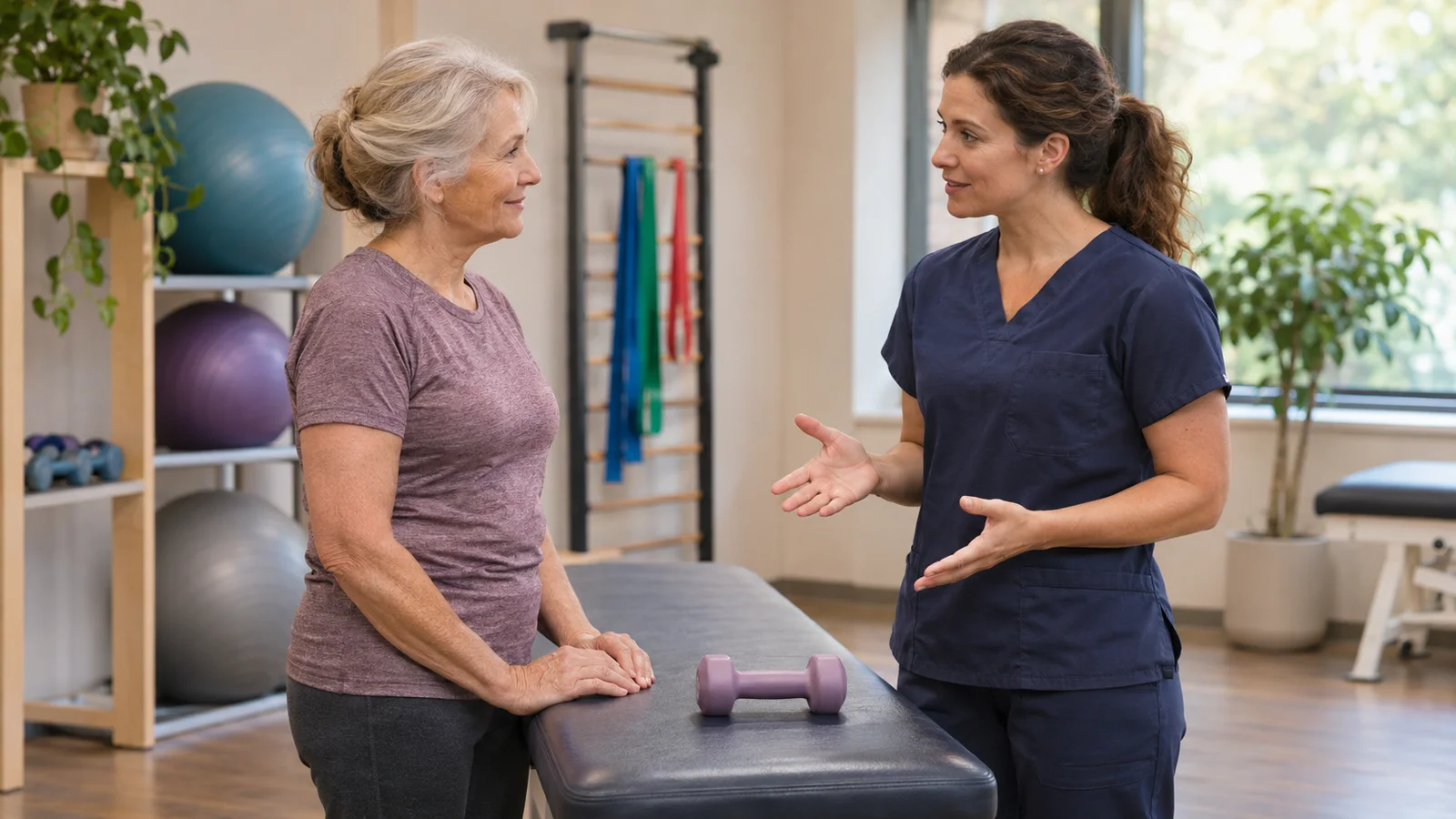
A bone density report can tell you that your bones are more vulnerable to fracture. It gives much less information about what to do when you pick up a grocery bag, get up from a low chair, or join a strength class. Resistance training can be part of an osteoporosis care plan. A physical therapist can help you work out which movements, loads, and starting positions fit your fracture history and the activities you want to keep doing.
The product overview for Shelly Manning’s The Bone Density Solution is available for readers browsing her bone health resources. This article focuses on what clinical guidance says about exercise and what to ask when you want help putting it into practice.
What strength training can do for bone health
Resistance training makes muscles work against a load. That load might come from your body weight, a resistance band, a machine, or a handheld weight. Over time, progressive training changes the challenge as your ability improves. Leg strength can help you stand from a chair or climb stairs. Trunk and back muscles help you stay upright and manage the loads you encounter in daily life.
Bone health guidance generally combines resistance training with exercises that challenge balance and practice everyday movement. The 2023 Canadian osteoporosis guideline recommends balance and functional training at least twice weekly for fall prevention and suggests progressive resistance training at least twice weekly in the populations it addresses. These are general goals. The starting load, the movements you practice, and the degree of supervision depend on what you can do comfortably and on your risk of falling or breaking a bone.
A walk is a useful way to stay active and can fit alongside that training. A walking route may do little to practice rising from a low seat, carrying a load, or controlling a shift in weight. If those movements are difficult, describe them at the appointment. You can discuss examples that transfer to the trips, chores, or hobbies you care about.
Bring the fracture history as well as the scan
Bring your bone density report if you have it. Tell the therapist about any fractures, roughly when they happened, and what you were doing at the time. A broken bone after a fall from standing height is relevant even if it happened years ago. Mention a known spine fracture, ongoing back pain, or new back pain after a small fall or lift. New symptoms after an injury may need medical evaluation before you begin or add load.
Also share any recent falls, close calls, or activities you have stopped because you worry about falling. Mention a walking aid, vision changes, or dizziness if these affect how you move. A list of medicines and any instructions you received after a fracture can help the therapist coordinate with the rest of your care team. If you do not have your scan report, you can still describe your daily movements and ask how the clinic wants to obtain your records.
Choose one everyday task to make the conversation concrete. For instance, if a bag of laundry is hard to carry down the stairs, explain where you pick it up, whether you need a free hand for the rail, and which part feels unstable. That gives the therapist a clearer picture than a general request for stronger legs. It can also reveal an immediate change, such as carrying smaller loads, while you work on strength or balance.
Ask about bending, reaching, and carrying
Osteoporosis guidance pays particular attention to the way the spine is loaded. A UK consensus statement advises avoiding exercises or daily postures that involve a high degree of forward spinal bending, especially when loaded. The Bone Health and Osteoporosis Foundation describes ways to adapt bending and turning during daily tasks. A therapist can demonstrate how to bend at the hips, change the height of an object you are lifting, or turn with your feet in situations that matter to you.
Ask which movements need extra care because of your history. A person with vertebral fractures or several low-trauma fractures may need more specific guidance about how much impact to take on and how to begin strengthening. Ask the therapist to explain any changes in plain language. When you practice at home or in a group class, you should be able to tell whether a new movement uses the variation you discussed.
It helps to bring an example from a class or a home routine. Show the instructor’s description of an exercise or explain where your hands and feet go. Questions like “Should I bring the load closer to me?” or “Can we practice this from a higher surface?” make it easier to discuss adjustments. If the exercise you are learning looks different from a version on video, ask which details matter for your fracture history and balance.
Ask about getting into and out of each exercise position. A floor exercise may be comfortable once you are on the mat, while getting down and standing back up may be difficult. A therapist can see whether you need a different surface, something stable to hold, or an exercise done from a chair. Apply the same question to any machine you use. Reaching a low pin or turning to retrieve a weight can create a challenge separate from the exercise itself.
Agree on a starting plan and a way to progress
A first visit can include watching you stand from a chair, walk a short distance, or shift your weight near a stable support. The therapist may ask where you feel effort, whether a movement brings on pain, and how confident you are doing it. If your routine is meant for home, show or describe what space and equipment you have. A stable chair and a clear floor area may be more relevant than a gym full of machines.
Before leaving, ask for the starting version in a form you can refer to later. Useful details include the height of the chair, the resistance or weight, how much hand support to use, and whether you need someone nearby. Ask what would show the exercise is ready to progress. Your therapist may first want you to complete it with steady movement and good control. When you increase a challenge, ask whether to adjust resistance, repetitions, or another feature first.
Make sure you know which sensations to report. Effort in the working muscles can be expected. Sudden sharp pain, new back pain after a minor strain or fall, or symptoms that change how you walk deserve attention. Ask the therapist how to contact the clinic if a problem appears after you get home, and who will advise you about resuming training.
If you are already working hard at exercise you enjoy, tell the therapist which parts you hope to keep. A lesson on how to adjust a movement or how to judge its effort can be more useful than a general instruction to be careful. Ask which parts of your current routine already train strength or balance. This helps you find out whether you need to add an exercise or simply change how you do one.
Track what you can do in everyday life
Day-to-day milestones can show progress between bone density scans. You might notice it takes less effort to stand from the same chair or that you feel steadier turning in the kitchen. If you track a task, use the same setting each time and keep any agreed safety support in place. Share improvements and difficulties at follow-up. These changes help the therapist adjust your program, while your medical team uses other information to monitor fracture risk and decide whether further care is needed.
If you want to continue exercising after supervised visits, ask how to explain your movements and limits to a class instructor. Find out whether the class can offer a suitable variation and give you time to practise it. If the instructor cannot see you clearly from the front of a crowded room, a smaller group or another format may be more practical. Your physical therapist can also help you plan how to return after a break or illness.
Readers who want to explore the companion title can review the book details for The Bone Density Solution. For the appointment, bring the fracture history you know, name one task you want to improve, and ask to practise a starting version that you can repeat with confidence.
Sources and further reading
- Osteoporosis Canada, Clinical Practice Guideline for Management of Osteoporosis and Fracture Prevention, 2023
- Brooke-Wavell et al., UK Consensus Statement on Physical Activity and Exercise for Osteoporosis
- Bone Health and Osteoporosis Foundation, Exercise and Safe Movement
- Osteoporosis Canada, Too Fit to Fracture
RECOMMENDED READING
A practical guide for readers interested in bone densityA guide to bone density
The Bone Density Solution
A digital guide by Shelly Manning. Review the program overview and contents before deciding whether it is relevant to you.
- Topic: bone density
- Author: Shelly Manning
- Format: digital guide
 Secure checkout through ClickBank
This page contains affiliate links. We may earn a commission if you purchase through them, at no extra cost to you.