Spirometry for a Long-Term Mucus Cough: What the Test Can Tell You
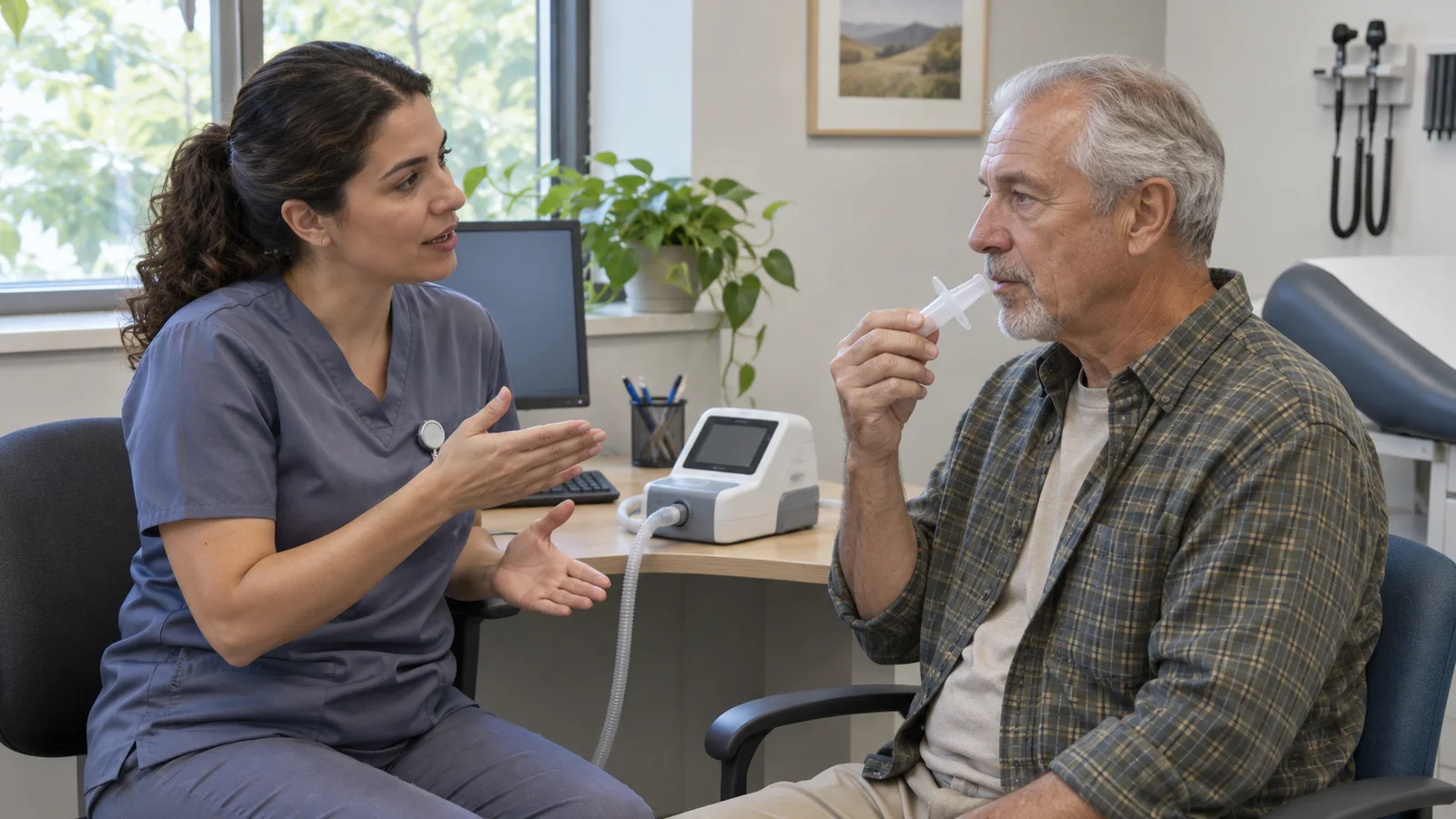
If you have been coughing up mucus on many days for months, a clinician may suggest spirometry as part of checking for chronic bronchitis and other causes of long-term cough. This breathing test measures how much air you can blow out and how quickly you can move it. It can show whether air has trouble leaving your lungs, which matters when chronic obstructive pulmonary disease, or COPD, is under consideration. It also helps to know what the test leaves unanswered, so you can make sense of the report when it arrives.
The product overview for Shelly Manning’s Banishing Bronchitis digital guide describes the separate educational product available on this site. Lung function results belong in a discussion with the clinician arranging your evaluation.
Why spirometry comes up when a mucus cough keeps returning
Acute bronchitis is usually a short illness, and the cough can stay around after the first symptoms improve. Chronic bronchitis describes a different pattern involving an ongoing cough that brings up mucus. It can occur in people with COPD, a condition involving persistent difficulty moving air out of the lungs. The history describes the cough and mucus pattern. Spirometry adds information about airflow. A person can have a long-term mucus cough without the airflow obstruction needed to confirm COPD.
Clinicians consider the whole picture because many conditions can make someone cough or become breathless. Along with symptoms, they may ask about tobacco smoke, air pollution, or exposure to dust and fumes at work or at home. They may also ask whether you have had repeated chest infections, wheezing, or trouble keeping up with ordinary activities. Your answers help the clinician decide whether spirometry is likely to be informative and whether other checks make sense.
The name of a previous illness can be useful background. If you have been told you had bronchitis several times, bring the dates if you know them and describe what happened between episodes. A clinician will want to know whether there were weeks when the cough went away completely or whether it never quite settled. That distinction can be hard to remember when you are asked on the spot, so a few notes before your visit may help.
Before the appointment, confirm which instructions apply to you
Ask the testing service whether you should take your usual inhalers before the visit. Instructions can differ according to the reason for the test and the medicines you use. If the clinic asks you to withhold an inhaler, ask which one, for how long, and what to do if you need it sooner. Bring an up-to-date medication list or the inhalers themselves if requested, and tell the technician when you last used them. If you receive no instructions or the message is unclear, call the testing service before changing your routine.
The testing service may give instructions about smoking, large meals, or other activities before the appointment. Call ahead if you have a new chest infection or if you have recently had surgery or a serious heart problem. The clinic can explain whether to come as planned or reschedule. If your cough or breathing has suddenly become worse, contact a healthcare professional about that change. A scheduled lung test may be days away, and a new symptom may need its own assessment.
You can also ask how long the visit is expected to take and whether the result will go directly to the clinician who requested the test. Tell the clinic if you need an interpreter, have hearing difficulties, or need instructions in a different format. Spirometry involves following short verbal cues in sequence. Making those cues clear can make the visit easier and give the technician a better chance of getting useful measurements.
What usually happens during the breathing test
You will usually sit down and be asked to put your lips tightly around a mouthpiece. The technician may place a soft clip on your nose so air goes through your mouth. They will show you how to take a full breath and blow out hard and fast, then keep going until they tell you to stop. It can take a few tries to coordinate the first breath and the long exhale. Expect to repeat the maneuver so the technician can compare the measurements.
A cough during a breath, a leak around the mouthpiece, or stopping too early can affect a reading. If that happens, the technician may give you a different cue and have you try again. Needing another attempt says little about whether your lungs are healthy. Tell the technician if you feel dizzy, uncomfortable, or short of breath. They can pause and decide whether it is appropriate to continue.
Some appointments include a second set of readings after a bronchodilator, a medicine that helps open the airways. The technician may give it after the first set of breaths, wait for it to take effect, and repeat the test. Comparing the two sets helps the clinician see how airflow looks after the medicine. If you see two columns on a report, look for labels such as “pre” and “post” so you can ask about the right set of results.
How to read the labels on the report
FEV1 is the volume of air you blow out in the first second of a forceful exhale. FVC, or forced vital capacity, is the total volume you blow out during that effort. The FEV1/FVC ratio compares the two. A lower ratio means that a smaller share of the total volume came out in that first second. Both volumes and the ratio can tell the clinician something different about the test.
The Global Initiative for Chronic Obstructive Lung Disease uses a ratio below 0.70 after a bronchodilator as evidence of persistent airflow obstruction in people being evaluated for COPD. The quality of the breathing efforts, your symptoms, and your exposure history matter when interpreting the result. Borderline readings may need another test. A low FEV1 value by itself, or a percentage next to it, does not answer the same question as the ratio. If you get a copy of the report before your appointment, you can ask which value guided the clinician’s interpretation.
Spirometry usually measures airflow and the volume you exhale, while a finger oxygen monitor estimates how much oxygen your blood is carrying. A person can have a normal oxygen reading and still have a reason for spirometry. If you had both checks, ask what each showed and whether either has to be repeated. Understanding what the test measures makes it easier to follow the next steps in your evaluation.
You might also see a predicted value, a percentage of that value, or a range on the report. The laboratory uses reference information to compare the numbers with what is expected for a person with certain characteristics, including age and height. The predicted value does not come from another breath you took. Ask whether you are looking at an actual measurement or a comparison with a reference value before comparing it with a previous result or with numbers you found online.
Make the follow-up conversation specific
Start with the part of daily life that has changed. Maybe you now pause halfway up a familiar flight of stairs, or a cough brings up mucus most mornings before you have even left home. It can help to note how long that has been happening, whether some days are better, and whether you have had episodes that sent you to urgent care. Think about when you first noticed the difference. A short timeline can be more useful than a long record with little context.
Ask whether the breathing efforts were good enough for the clinician to interpret and whether the result showed persistent airflow obstruction. If spirometry did not confirm COPD and the symptoms continue, ask what else the clinician is considering. Depending on the findings, they may discuss repeat testing or another kind of assessment. Write down when to expect a decision and who will contact you. You do not need to wait for a test report to seek help for rapidly worsening symptoms. Severe difficulty breathing calls for emergency help.
If repeat or different testing is suggested, ask what question it would answer. A chest X-ray, for example, shows structures inside the chest, whereas spirometry measures airflow during breathing out. Either test can contribute information when used for the right reason. You can ask the clinician to explain what the new test might clarify and whether you need special preparation. This can be helpful if you had several appointments and are unsure which service will put the results together.
Before the discussion ends, ask what the result means for the symptom that brought you in and which change should prompt earlier follow-up. For information about the separate commercial product, see the guide overview and purchase details for Banishing Bronchitis.
Sources and further reading
RECOMMENDED READING
A practical guide for readers interested in bronchitisA guide to bronchitis

Banishing Bronchitis
A digital guide by Shelly Manning. Review the program overview and contents before deciding whether it is relevant to you.
- Topic: bronchitis
- Author: Shelly Manning
- Format: digital guide
 Secure checkout through ClickBank
This page contains affiliate links. We may earn a commission if you purchase through them, at no extra cost to you.