How to Read Your Bone Density Report
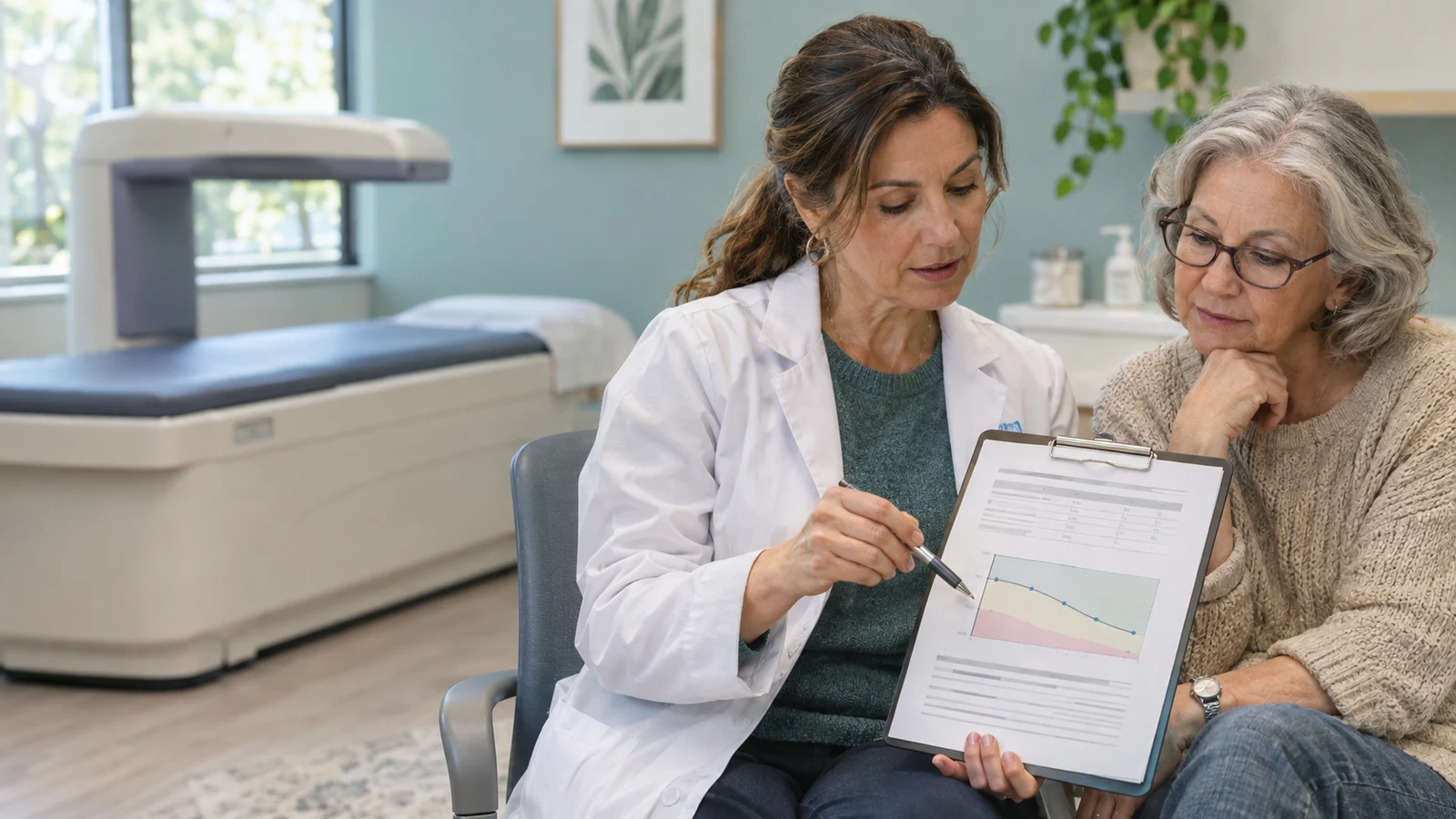
A bone density report can give you two different scores and several different numbers for the hip and spine. Start with the report’s summary, then look for the location listed next to each result. Knowing which bone was measured and which score applies to you can make the follow-up visit easier.
Check which bones the scan measured
A central DXA scan, sometimes written DEXA, usually measures the lower spine and hip. Your report may list the lumbar spine, total hip, and femoral neck, which is the narrow part of the thigh bone just below the ball of the hip. Those sites can give different results. Ask which result the clinician used and whether anything, such as spinal arthritis or prior spine surgery, made a measurement harder to interpret.
Find the score that applies to you
A T-score compares your bone density with a young-adult reference. Clinicians generally use it for postmenopausal women and men aged 50 or older. For an appropriate measurement, −1.0 or higher is in the normal range. A score below −1.0 but above −2.5 is in the low bone density range, sometimes called osteopenia. A score of −2.5 or lower is in the osteoporosis range.
A Z-score compares your bone density with a reference group closer to your age. Clinicians generally use Z-scores for premenopausal women and men younger than 50. A Z-score of −2.0 or lower is described as below the expected range for age. Ask how the clinician interprets it alongside your medical history.
Bring the earlier report if you have one
If this is a repeat scan, share the previous report and tell the clinic where it was done. Small differences between scans can reflect measurement variation. Ask whether the scans can be compared directly and whether the change is large enough for the clinic to interpret. This is especially useful if you switched facilities or machines.
Ask what the report means for fracture risk
Clinicians consider the scan alongside other information, including your age and any previous fractures. Mention if you broke a bone after a fall from standing height or took steroid tablets for a long period. Before you leave, ask which result is most relevant to you, how it affects your fracture risk, and when a follow-up scan might be useful.