Pool Exercise for Knee or Hip Osteoarthritis: What to Ask Before Your First Session
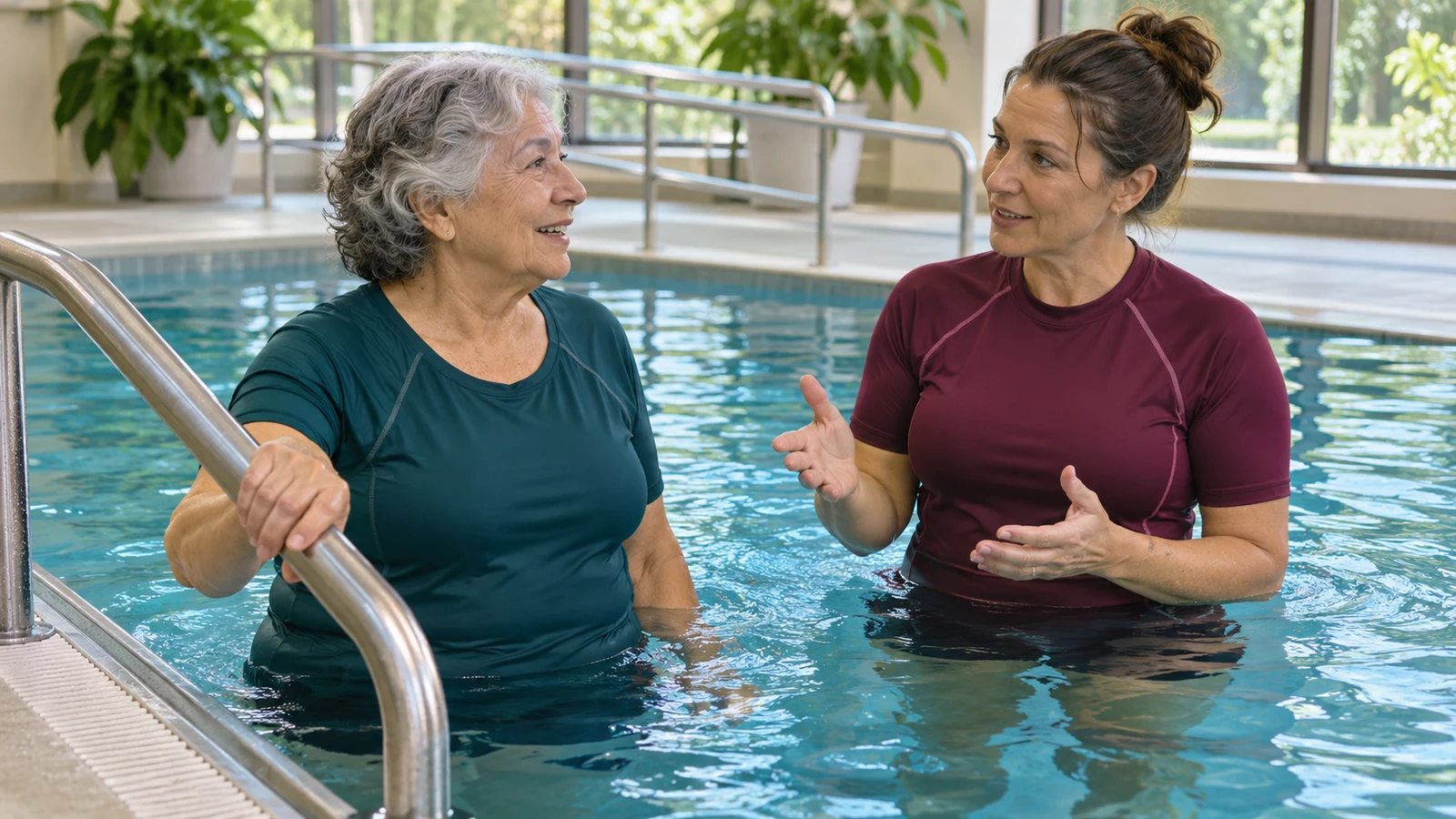
If walking on land is uncomfortable with knee or hip osteoarthritis, exercising in water may offer another way to move. Water supports part of your body weight. A Cochrane review found small short-term improvements in pain and daily function on average after aquatic exercise programs for people with knee or hip osteoarthritis.
Check how you will get in and out
Ask about the pool depth, steps, handrails, and whether a ramp or lift is available if you need one. Find out how far the changing area is from the pool. Tell the team if you use a walking aid on land or feel uneasy in water so you can plan the whole visit, including leaving the pool when you are tired.
Find out who leads the session
A physiotherapy session and a general pool class offer different kinds of support. Ask who will guide you, how many people will attend, and how you can pause or change a movement. Share any recent health changes with the team before you visit and ask what you should bring. If you feel dizzy or unwell in the pool, tell the instructor or physiotherapist right away.
Pick a daily activity to track
Choose something you would like to find easier, such as walking from the car to a shop or standing long enough to cook. After the first session, note what felt manageable and how your knee or hip felt later that day. Share that with the person leading the sessions so you can discuss what felt comfortable and what to adjust.
References
This article provides general health information. A physiotherapist can help you decide whether a pool program is appropriate for you.