Knee Osteoarthritis and Stairs: Making the Trip Easier
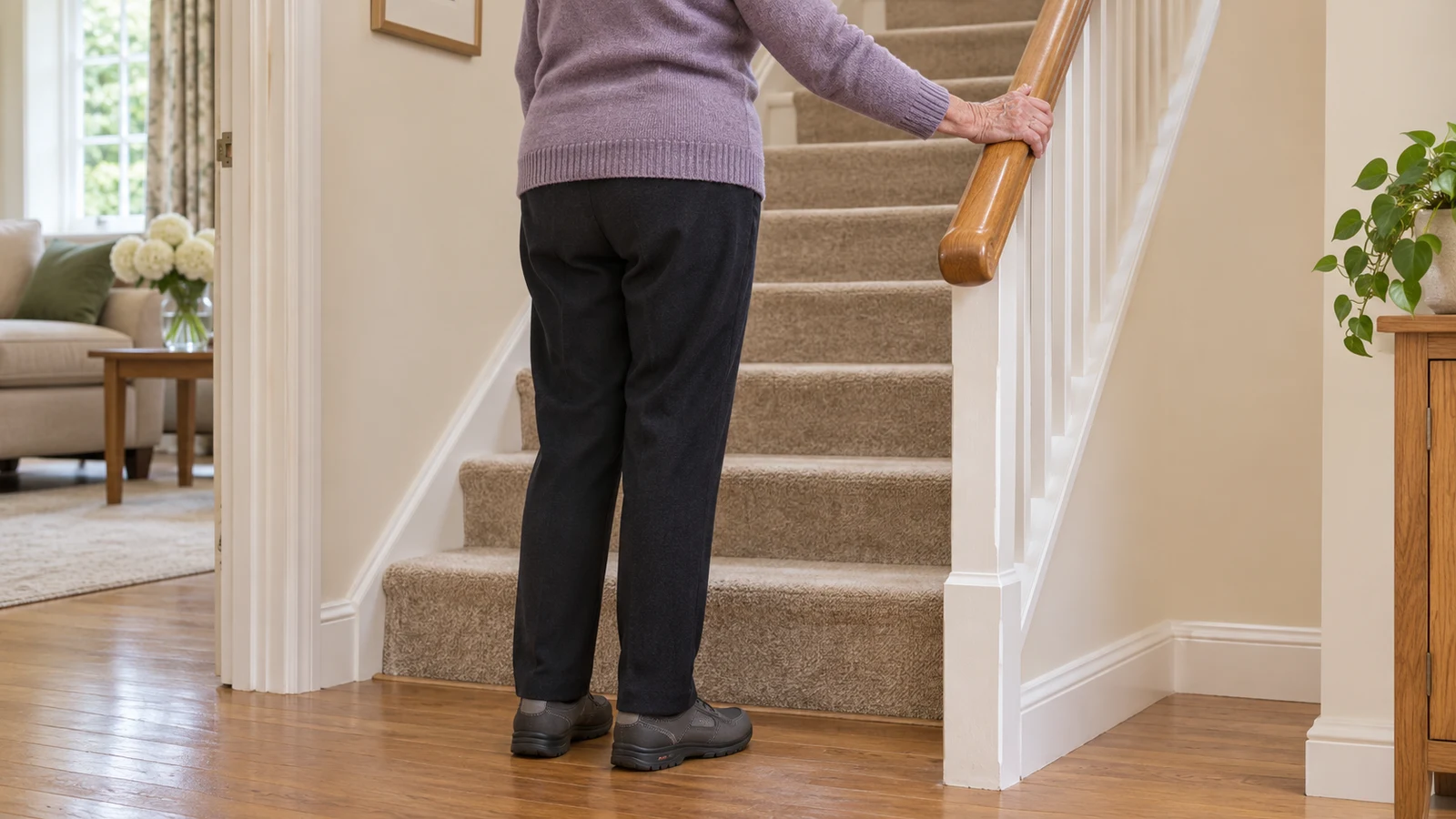
You might walk comfortably on level ground and still pause at the top of a staircase. Going up and going down ask different things of your knees. If you live with knee osteoarthritis, how you use the handrail, which leg leads, and what you carry can make a difference on stairs you use every day.
Leave one hand free for the rail
Before you step, make sure the staircase is well lit and clear. Wear shoes that grip rather than loose slippers. Face forward and use a sturdy handrail. If laundry or shopping takes both hands, ask someone to carry it or make smaller trips so you can still hold the rail. At a public building, an elevator is a practical choice when the stairs feel unstable.
One step at a time can be easier
If one leg is clearly stronger and you can use the stairs safely, you can try bringing both feet to each step before moving again. When going up, lead with the stronger leg and bring the other foot to the same step. When going down, lower the more painful or weaker leg first, then bring the stronger foot down to meet it. Use the rail and take the time you need. If both knees are painful, you use a walking aid, or you are recovering from surgery, ask a physiotherapist to show you a pattern that fits your situation.
Describe the stair that gives you trouble
If stairs are getting harder, tell your clinician or physiotherapist whether the problem happens mainly on the way down, whether you rely on the rail, and whether you avoid a particular staircase. Those details can help them assess strength, movement, and balance and choose exercises that fit the task. Seek urgent medical advice if you suddenly cannot bear weight, the knee locks or gives way, or it becomes hot and red with fever.
References
This article provides general health education. A clinician or physiotherapist can assess knee symptoms and stair safety in your situation.